
In It Together

fullsizerender

Last week our little family loaded up the car early in the morning and headed down to Baton Rouge for Hugh’s endocrinology appointment. Because Hugh has Type 1 Diabetes, he will have to see an endocrinologist every 3 months for the rest of his life. Not just until he reaches adulthood. Not just until he reaches his 40s. For the rest of his life.

That’s a lot to handle, in my opinion, so we always try to make the trip a family event. Scott and I take off work and we bring Amelia, even though I’m sure Hugh would rather his little sister not tag along most of the time. A lot of times my mom will join us as well, since we rely on her so much to help us with Hugh. Occasionally my dad will make the trip, too.

When the doctor enters the patient room, she knows to expect a crowd. She gives Hugh a hug, then turns around and gives the same hug to Amelia. It’s probably a little strange to have so many in one room, but our doctor never complains about it. I think she gets it.

On the way down to Baton Rouge on this trip, Hugh starts asking if Amelia will always have to come with us (she was being rather annoying and making all sorts of noises to irritate her brother). I told him not always – I’m sure we won’t always be able to arrange schedules and lives to be together for his appointments.

He said he hoped his wife would be able to come with us one day.

“With us? You don’t want it to be just you and your wife at your appointment?”

He replied, no – that he wanted it to be with his parents, and his wife could come along if she felt like it.

That’s right. Move over, wifey. Take your place right behind his mama. I’m sure there’s room for you in the trunk.

So why do we make such an effort to ALL go to Baton Rouge for his doctor’s appointments?

The answer is simple – I hope he looks back on these days with us and realizes he was never alone.

Type 1 Diabetes is a lonely disease. None of Hugh’s friends have to check their blood sugar. None of his friends have to wear a pump. None of his friends have to count carbs, drink juice in the middle of the night, worry about ketones, have nightmares of low blood sugars and no one helping him, skip a cupcake because of high blood sugar, or carry emergency glucagon everywhere.

It can be isolating and depressing to be the only one.

So we go. We go to show him we are in this together. He doesn’t have to face this alone. We will fight the fight right along with him. We will be the pillar when he crumbles, we will be the shoulder for the tears. We will prick our own fingers, we will carry the juice boxes. We will not leave him alone.

And friends, is there anything more in life than to know that you are not alone? There is a God who loves us, and family and friends who are by our side. What more do we need?

If I have learned anything from Hugh having Type 1 Diabetes it is that we need to show up for each other. And we need to keep showing up for as long as it takes. We don’t have to judge. We don’t have to criticize. We don’t have to put people in their place or condemn or condone. We usually don’t even have to say anything.

Sometimes, just sitting next to your big brother and reading a book in the doctor’s office is enough.

Share This:

Teaching and Learning With a Type 1 Diabetic Student

IMG_1053


Sally’s Note:

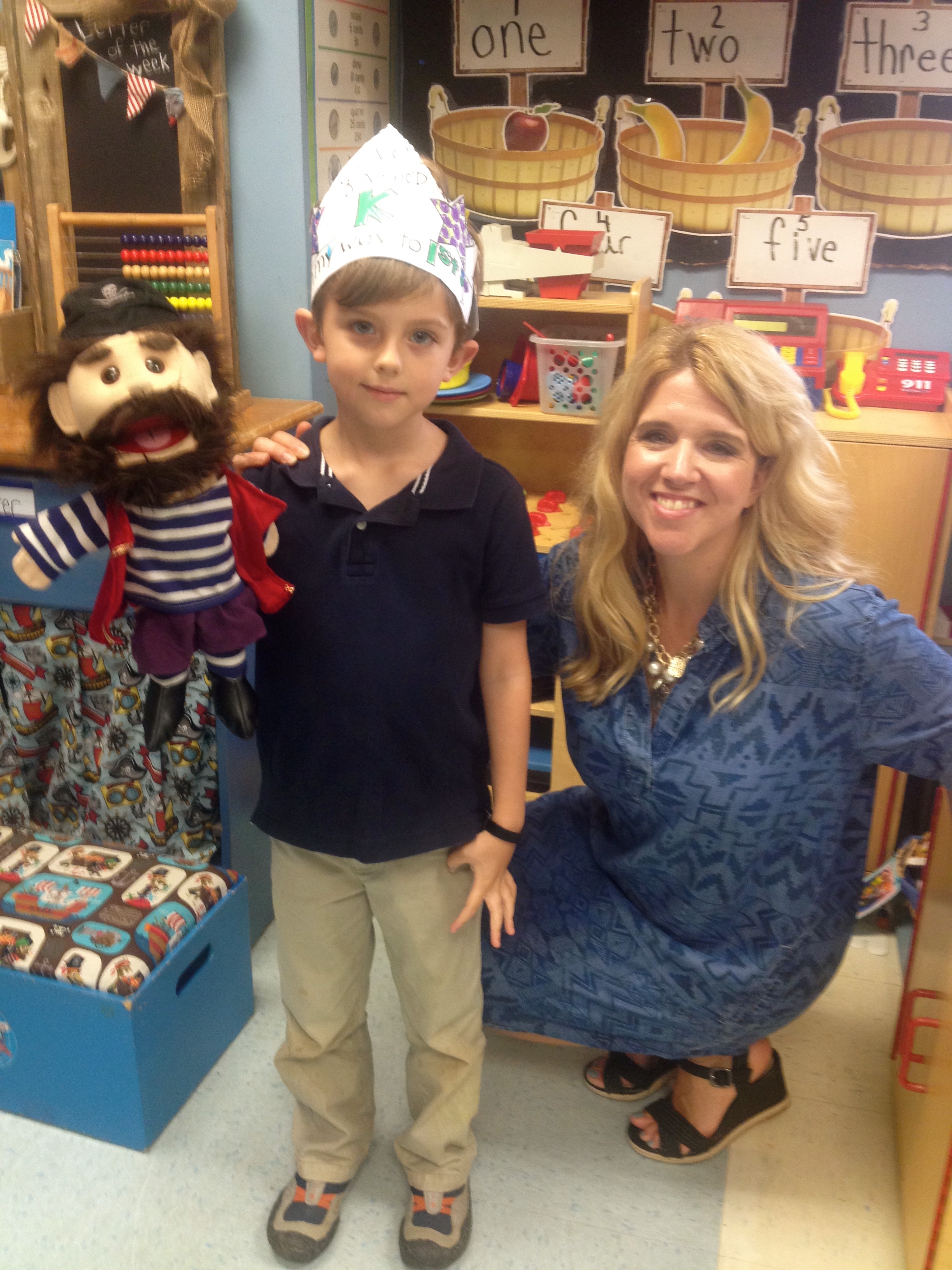
Ms. Hill was Hugh’s kindergarten teacher who literally saved me from drowning in all my worries and fears his first year in public school. She was more than a teacher, she became a dear friend – as have subsequent teachers who have taught Hugh. Teachers have a hard job, and adding a child with special needs makes it so much harder. But all of Hugh’s teachers have been up for the challenge and have worked with us in every possible way. There’s a lot of give and take, a lot of calling and texting, a lot of reminders and notes, a lot of tears (ok, mainly on my part the first day of school when I have to drop Hugh off and he’s getting older and needing me less and what if his blood sugar drops and what if his blood sugar is high and well, you get the idea!) I asked Ms. Hill to write this for other teachers, but I also hope it helps parents of children of all abilities realize how hard their teachers work to get it right. There are no words to express my gratitude to all of Hugh’s teachers who went above and beyond their job description to do just that.


Teaching and Learning With a Type 1 Diabetic Student

They knew he was different, yet they knew he was the same. Hugh went to the office several times a day, but he did not look sick. He never ate that birthday cupcake like everyone else (always icing first), but he did take his cupcake home for later. He had cool stuff in his lunch box, but there was always a special piece of paper with some numbers on it. You wouldn’t see an oatmeal cream pie in that lunch box, but sometimes there was a Hershey’s kiss. Hugh ran just as fast as the others in his kindergarten class. He was one of the first to begin reading. Hugh was a great artist and story teller. He could do everything a strong kindergartener could do and then some, but Hugh has Type 1 Diabetes.

When I was informed during the summer that I would have a diabetic student on my roster, it of course sent a fear through me. What if I did something wrong? I am not a nurse. I am only qualified to apply cute band aids and boo-boo bunnies, to check warm foreheads with the back of my hand, and be intuitive about that kid that looks a bit green in the lunchroom. My first thought was, “I am going to screw this up”! Sixteen years had gone by, without having a student with serious medical conditions, but it didn’t take long for me to realize something. God would give me the tools I needed to be the teacher and care giver that Hugh needed. I had a lot to learn about Diabetic kids. I started by doing some online research. I thought about how this special child would want to be treated like everyone else, with empathy and not sympathy. I thought about his parents and how they would need some reassurance that I got this! I thought about how I could make a difficult situation be a learning experience of character and awareness for all the students in our class.

Are you going to be a teacher or a care giver of a student with Type 1 Diabetes? You can do it. Each child is different, but I’d like to share a few things that made our school year together a successful one.

  1. Meet with your student and their family before school starts somewhere casual. Hugh’s mom and I scheduled a meeting at Chick Fil A. We had lemonade and talked as Hugh and his sister played. Meeting before school in a casual atmosphere put us all at ease and it helped me connect with this precious family.
  2. Get all the school faculty “in the know”. Hugh’s mom sent several important things that gave our entire faculty some piece of mind. She sent documents with Hugh’s picture, condition, and emergency directions. I put it in my substitute binder in case I was out of the classroom. We had them in the office as well. Hugh had about 5 other teachers, such as P.E. and enrichment classes. We all received an emergency snack pack in case his blood sugar dropped. The first few weeks of school, I made sure his art, music, computer, library, and P.E. teachers knew just who Hugh was and reminded them of his condition. During the school year, if any of his enrichment teachers had a substitute, I would discretely ask them not to dismiss any complaint Hugh might have and to always send him to the office with a buddy if he had a complaint.
  3. Give a diabetic student your full attention If you’re a teacher, you know kids will come to you 100 times a day and only about 1 or 2 of those times is even necessary. We make split second decisions on what we should pay attention to and what to brush off. With Hugh, I was lucky; he was not a needy child. He was very independent and didn’t need me to fix things for him often. So when Hugh came to me, I always stopped what I was doing and looked him in the eye to assess his situation. Teachers have a mother instinct. These instincts often directed me in the decisions I made in his daily routines. If I was ever in question about something he should eat, how his face looked a bit paler than normal, a nervous look in his eye, or a sign of lethargy, I would call mom or our amazing school secretary.
  4. I can’t stress enough how important the school secretary is if your school doesn’t have a full time nurse. Make sure you work well with her and that you are on the same page. The more people being aware and trained with a diabetic student, the better.
  5. Make them fit in and not stand out. It was important to me to make Hugh feel he was as normal as everyone, so I tried to always stay calm and reassuring. I never called him out about his condition and tried to handle all matters discreetly. However, I let him own it. When we had our weekly letter of Dd, I used that opportunity to let Hugh teach his classmates what Diabetes was all about. Dd is for Diabetes. He did great! The kids asked him questions like, “Do the shots hurt?”, “Does diabetes go away?”, “Can I catch it?” and the hard one, “Why did you get Diabetes?” Hugh answered all their questions better than I could have. After that day, his classmates were like oh, okay, and it was business as usual. But this was empowering for Hugh. He could handle this condition he had and he could help his friends be aware of this disease. His friends that would be with him for years to come will continue to be by his side, aware and not scared of it all.
  6. Keep an open door. Anytime Hugh’s parents or grandparents wanted to come in, they were welcome, and often they did. This turned out to be the biggest blessing for me as a teacher. Once a week, Hugh’s grandmother came at lunch and hung out with us in the classroom for a couple of hours. She read with some, helped with puzzles and crafts, and all the while she was able to take the pulse of Hugh’s environment. This gave all of us such a feeling of comfort. If you are a teacher that feels strange about parents being in your room because they are critiquing you, please don’t. Do what you always do, and they will trust you. You will be so grateful for that extra set of caring hands.                                                                                                                                                                                                   At the end of the year, I came to the realization that having a child with special needs doesn’t have to be an inconvenience or a cloud always looming overhead. Having a student with Type 1 Diabetes made me the student and Hugh was so often the teacher. I think I received more from this child and his family than I could ever give them. So, have no fear, this can be a great year!

Esther Hill

Kindergarten Teacher @ Phoenix Magnet Elementary


IMG_1524

Share This:

Weeping and Rejoicing

Pond 1


Let love be without hypocrisy. Abhor what is evil. Cling to what is good. Be kindly affectionate to one another with brotherly love, in honor giving preference to one another; not lagging in diligence, fervent in spirit, serving the Lord;  rejoicing in hope, patient in tribulation, continuing steadfastly in prayer; distributing to the needs of the saints, given to hospitality. Bless those who persecute you; bless and do not curse.

Rejoice with those who rejoice, and weep with those who weep.

Romans 12:9-15


Friends, I love this chapter in Romans, don’t you? Cling to what is good? Yes. Love without hypocrisy? Yes. Be kindly affectionate? Yes. Weep with you? Yes, and I’ll probably bring you a casserole too.

These verses have sustained me and encouraged me for many years, and I always thought I attempted to model my actions using this scripture. Until recently. Do you know what I realized I have the hardest time doing for you?

Rejoicing with you.

Not blessing those who persecute me. Not being patient in tribulation. Not abhorring what is evil.

Nope, none of those give me as much trouble as the simple act of rejoicing with you.

Are you weeping? I can weep with you. My heart truly hurts for you. I want to reach out and help you. I want you to know I am there, praying for you, supporting you, standing next to you. I will organize a food train that stretches out for weeks. (In the South, bringing you food is our way of saying, “We love you. We are praying for you. Eat some potato salad and banana pudding and feel as close to heaven as you possibly can while still on Earth.”) I will babysit your kids, I will buy you groceries, I will take care of you.

If I can do that, then why do I have so much trouble rejoicing with you?

I’m going to honestly say, I don’t have an answer to that question. All I know is that when I see you have had a wonderful vacation with your family, when you and your husband took a weekend getaway, when your child had an excellent year in school, when you get a new car, when you get a great job (I could go on, but you get the idea), I have a really hard time rejoicing with you. Somewhere, there is a little part of me that is holding back. I’m happy for you, really. Except for that little part of me. That little part of me isn’t rejoicing at all.

Maybe it’s because I selfishly want those things for myself. Maybe it’s because I’m scared there’s only so much goodness in the world, and if you take some of it, there isn’t as much left for me. Maybe it’s because I feel like my life is not as fun as yours.

Or maybe it’s because I want you to understand.

When Hugh was diagnosed with Type 1, I felt so alone. I felt like no one could possibly understand what we were going through. I was so angry that while most moms had to worry about their child’s behavior report, or next test, or baseball game, I had to worry about keeping my child alive for the next day. There was a canyon in my heart between me and everyone else. And I stopped rejoicing with you.

I hope you understand that this was not intentional. It never occurred to me that my hurt was creating a barrier between us. I did not realize until now that I could not rejoice with you. And I hope that I’m not alone.


Sally and Boat 1


Dear Friends, we have a hard time rejoicing with each other, don’t we? Maybe it’s because we all have hurts and sadness and pain and we just want someone to understand. Maybe if we all shared the good and the bad, we could start to rejoice again. I don’t know about you, but I rejoice a lot easier with someone when I know where they have been, what they have endured, and how they have overcome.

When was the last time you can say you truly rejoiced with someone? There have been only a handful of times that I can recall rejoicing with pure selflessness and love. And it felt so good. It was a feeling I can only describe as God’s love filling me up and pouring out.

We were not created to be miserable, jealous people. It doesn’t feel good. And I truly love the life I have. It’s not perfect, but I am beyond happy with my home, my husband, my kids, my family, my friends, my job, my church. When I take the time to think about it, your happiness does not take away from mine. It only adds to it.

So here is my promise to you. First, I will try to say “Me too” more often. Having a really bad day? Me too. Stressed out at work and yelled at your kids because they were an easy target? Me too. Scared that sickness or death is lurking around the corner? Me too. Worried that your children aren’t going to turn out ok and you will be to blame? Me too. Had a fight with your husband? Me too.

Second, and here is the much harder one, I promise to start rejoicing with you. When you tell me about your new job or new house or great vacation, I am going to take a deep breath, push out those thoughts of selfishness and fear, and I am going to truly rejoice with you. I am going to take your hand, smile, and let that feeling of God’s love pour out of me. I might not get it right every time, but I’ll be working on it. (And I might even bring you a casserole for the happy occasion).


Pond and Boat

                             “The two most powerful words when we’re in struggle: me too.”  – Brene Brown

Share This: