We Must

IMG_1736

When Hugh was first diagnosed with Type 1 Diabetes, among the many thoughts that ran through my mind, was “We can say good-bye to family vacations”. I’m not sure why I thought this. I thought a lot of things in those first few months that came out of an overwhelming sense of fear, loneliness, and loss. Simply put – I was scared to take Hugh out of the state. I was scared we would end up in the hospital where we knew no one and had no relationship with a doctor. I was scared we would forget his supplies and be left with no way to manage his diabetes. I was just scared.

But fear has a funny way of driving us forward. Wasn’t it Eleanor Roosevelt who said, “You must do the things you think you cannot do” ? That doesn’t leave us with much of an option, does it? WE MUST.

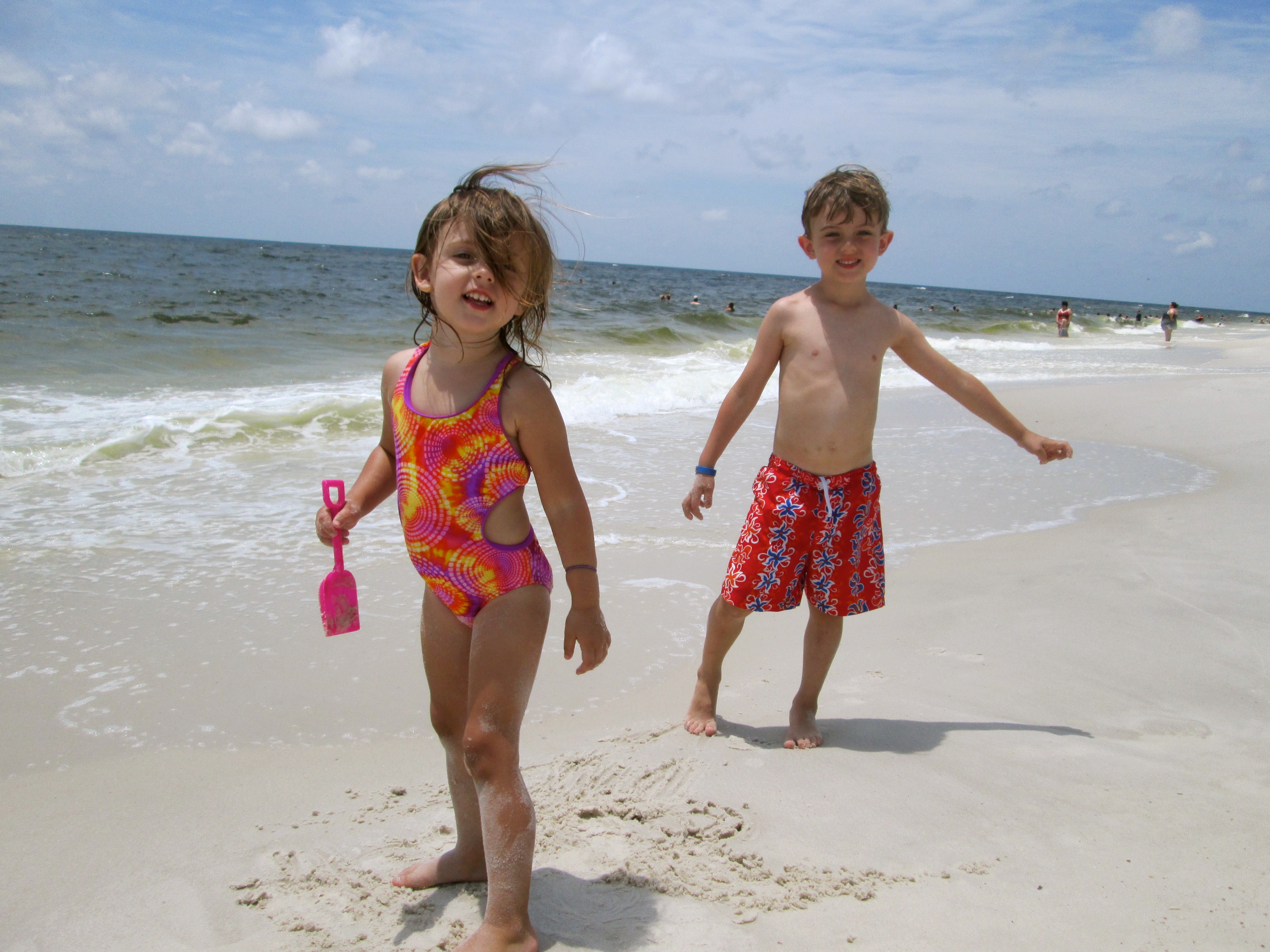
So last year, we packed our bags and many, many diabetic supplies, prepared as much as we could, and headed to the beach with some great friends. (As an aside, we Southerners can’t get enough of the beach. We live in places that are blazingly hot and humid, and we still flock to the beach like pilgrims every summer. We grow gills and become water bugs, lazily enjoying the humidity and salty sea air that seem to pulse along with our Southern hearts.)

And here is what happened:
IMG_3573


IMG_3658


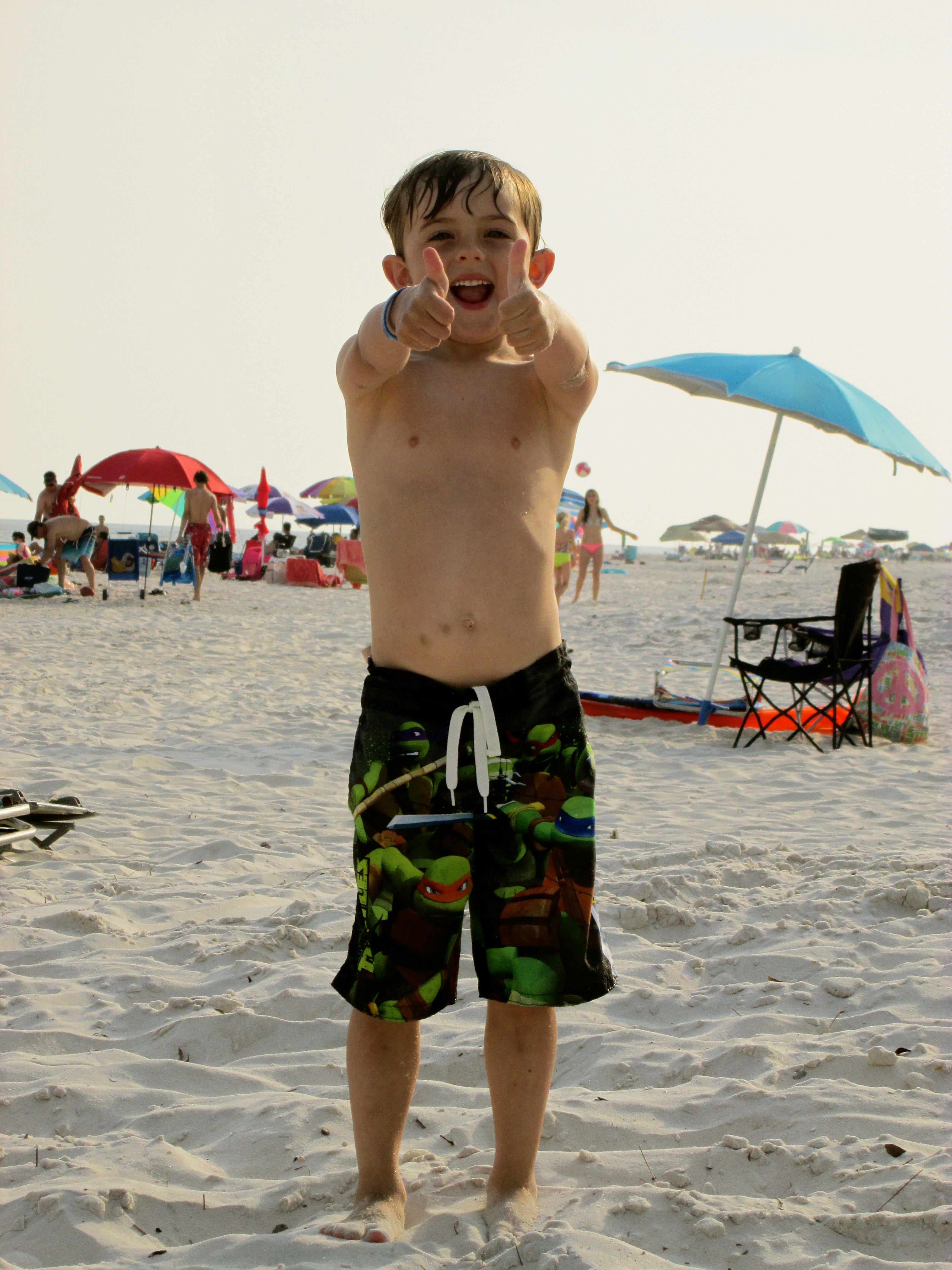
It was wonderful! We had a great time! Yes, there was a lot more planning on my part, a lot of calculation and always packing snacks, but it was a good vacation! I felt like I was keeping an imaginary score card against diabetes in my head.

Our Life: 1

Diabetes: 0

So this year we again packed our bags and the many, many diabetic supplies and headed to the beach with just the four of us. (Our gills had grown back after a long, cold winter.) My score card had gained many more points on it throughout the year, and I had confidence.

But the thing about diabetes is – it is still hard. No matter how many times I prick Hugh’s finger, give him his insulin injection, and count carbs, it doesn’t get easier. When we stopped at a convenience store and Hugh asked for an ICEE, but there was no sugar free option – it was hard. When we checked his blood sugar in the parking lot because he said he felt funny, and it was 62 (a regular blood sugar is around 100) – it was hard. When I had to pull out the meter on the beach and wipe gritty sand off of everything just to get a reading – it was hard.

And I could have gotten lost in my own sad feelings and loneliness again, if it hadn’t been for one thing. I couldn’t see the first few days we were at the beach. I had torn my contacts and didn’t have a replacement pair with me, so for two days I wandered around blindly hoping no one would notice my confused looks and squinting eyes.

When you can’t see people very well, you pay a lot more attention to what they DO than what they look like. If we as moms are very honest, part of going to the beach is to look at the other moms and compare ourselves. We are all very aware of who has the best after-baby body and who is struggling with a new shape. We watch the moms who are thin and wish we could look like that. We see the moms who are shapelier than us, the moms who have better abs than us, the moms who never even looked like they had kids, and we constantly compare. Truthfully, it is the worst part about going to the beach.

But as I said, I couldn’t do that this time because all I saw were fuzzy shapes and colors. There was no comparing. And do you know what I saw?

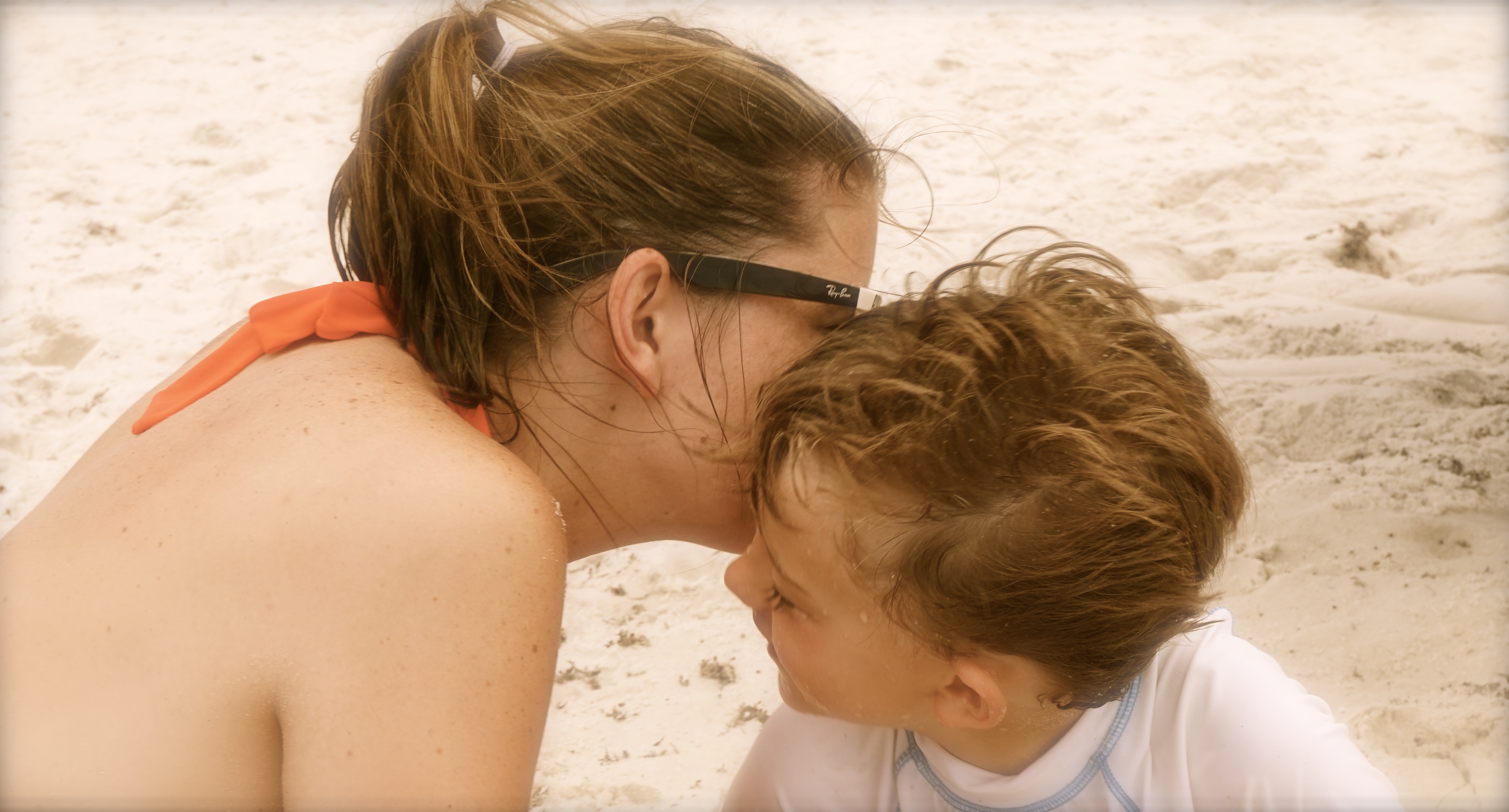
I saw a mom play catch with her two year old son over and over again in the surf. He couldn’t catch and he couldn’t throw, but she patiently played with him and encouraged him. I saw a mom stand at the slide on the splash pad while her toddler went up and down it at least a hundred times. I saw a mom almost rip her arm out of socket while holding hands with her little girl who wanted to play in the waves. The waves would knock the little girl down each time and the mom never let go of her hand.

I saw a mom with a toddler on the beach, but she also had her adult brother with her who was blind. She managed to walk her toddler and her brother along the sandy shores with gentle, guiding arms and a smile on her face. When I saw this young mom, I thought of an older mom I had seen on the beach the year before. Her daughter was in a wheelchair and they had brought her in one that was specifically designed to roll along the beach.

I couldn’t help but be proud. I wanted to walk up to each of these moms and say, “We did it, didn’t we? We did what we thought we couldn’t do? Way to go, Mom! Where should we try next? Europe? Bahamas? Climbing Mt. Everest?”

I’m sure the moms who were playing with their children on the beach would have much rather been lying under an umbrella, reading a book and taking it easy. I know the mom who stood thirty minutes at the water slide would have much rather gone inside and taken a nap. And I’m almost positive the mom with the brother who was blind and the mom with the daughter in a wheelchair probably thought the same as I did – “We can say good-bye to our family vacations.”

But we didn’t let the fear and exhaustion lead us. We did the exact thing we thought we couldn’t do. And we are stronger and wiser and happier because of it.

Moms at the Beach: 1
 

DSC01313

“You gain strength, courage and confidence by every experience in which you really stop to look fear in the face. You are able to say to yourself, ‘I have lived through this horror. I can take the next thing that comes along.’ You must do the thing you think you cannot do.”

― Eleanor Roosevelt, You Learn by Living: Eleven Keys for a More Fulfilling Life

Share This:

The Longest Day: Part 1

I’ve thought a long time about how to share Hugh’s diagnosis day story. It’s hard to tell his story without sounding sad and dramatic. It’s hard to tell it without sounding egocentric – as if we were the only ones with this type of story to tell. It’s hard to write it with hope and optimism. It’s hard to share it period.

But I hope you can look past the tears with which it was written. I hope you can understand this mama’s heart and how my spirit felt so crushed that day. I hope you can read between the lines and realize how God’s hand was on us that day and how He carried us through. I hope you know God’s hand is on you too – all the time. Because I would not share this if it were just a story. I hope you can see it is so much more –


IMG_0086

The day Hugh was diagnosed started off as another busy Tuesday. We celebrated Hugh’s birthday at school that morning – he had just turned 5 and I brought green jello and green drinks to his class. I was also one of the teachers for Hugh’s class and I was busy with teaching lessons, corralling busy 4 and 5 year olds in the room, and lesson planning after school. But something had been nagging me and I was upset. Hugh was sick.

Two weeks earlier Hugh had gotten his tonsils removed after chronic strep infections for over a year. We thought this would help him feel better. We thought the constant fever and sore throat made him irritable, grumpy, and have lots of tummy aches. But he was only getting worse.

He cried for no reason. He was tired all the time. And the weekend prior to that Tuesday he started going to the bathroom at least every hour. He started waking up at night to go to the bathroom. His hunger was never satisfied. He crammed food in his mouth like he was starving. He looked so skinny people were starting to comment. After the third person commented about how thin he looked, I got the scale from our school and weighed him. He was 5 years old and weighed 38 lbs. Since getting his tonsils out, he had lost 4 lbs. When his thirst became unquenchable, I knew. When he was washing his hands in the sink and he told me he was so thirsty he wanted to drink the soapy water pooled at the bottom, I called the doctor.

“Could this be something related to getting his tonsils out?” I asked the doctor when we went on Tuesday afternoon. “Is his body flushing out the anesthesia or could it be thyroid related? You know, his dad has thyroid problems.”

Our kind and patient doctor just looked at me with sad eyes. “You know what this is,” he said. He had not even done a blood or urine test, but he knew by just looking at Hugh. And I knew too.

“Well, I know it can be a sign of diabetes, but that can’t be it. I’m sure it’s something else.”

Our doctor just smiled and said he would run the tests and we would know for sure in 5 minutes.

We knew in the next two minutes.

“He’s got it – type 1 diabetes. His blood sugar is 388. A1C 7.9. A few ketones in his urine, but not bad right now. He’s ok – you caught it early”. Of course, all these numbers just swirled around in my head. I had no idea what a normal blood sugar was supposed to be and had never heard of an A1C number or ketones. At that moment, I went numb.

Now this is the part of the story that is hard for me to share. All I can tell you is that God saw a mother who was numb with shock and a small boy who was sick and confused. And He wrapped his arms around us and carried us through. It’s hard  to share because I don’t believe that God chooses to shine favor on some and not on others. I don’t believe He helped me that day and not the mother the next day who was in the same doctor’s office. I don’t believe I deserved His help because I prayed to him and another mother did not. In fact, in that moment, I didn’t pray at all. I did not even think about God.

But He was with me anyway, and I have to believe He is with all mothers in that moment. He shines his favor on all of us – we just have to choose to see it.

“I’m sending you to the best pediatric endocrinologist I know,” our doctor said. “You need a team of people to help you with this. You’re going to be ok and these people will make sure of it. Call Scott. You need to leave right away.”

He walks out of the room and I pick up my phone to call Scott. I have to try several times before he will answer and I tell him briefly what I know. We hang up quickly. What I don’t realize in that moment is that Scott had been in a meeting with a local businessman in his office. Scott apologizes for taking the call, but knew if I called repeatedly something must be wrong. When Scott hangs up the phone, the businessman says “Are you ok? You look like you just got some bad news.”

Scott is stunned and simply answers, “I think I am going to have to leave right away for Baton Rouge. My son has just been diagnosed with diabetes. We have to go see an endocrinologist there.”

The businessman smiles and says, “Then you are going to see my sister. She is the pediatric endocrinologist there.”

And he picks up his cell phone and calls his sister.

And of course, she answers right away. They speak to each other a few moments and then HE HANDS HIS PHONE TO SCOTT.

And Scott is able to talk to her and let her know we are coming and she tells him SHE WILL BE WAITING FOR US.

When our pediatrician walks back into the patient room, he is stunned and says, “How did Scott talk to the endocrinologist before I did? I just talked to her and she said she already knows about your family.”

And all I can do is shake my head, because in that moment I did not choose to see God. I just couldn’t. All I knew was that everything I had held firm and fast to in my life had just crumbled, and I was fighting hard, yanking with all my might, to regain control.

It would be a long time before I chose to see God again.

To Be Continued . . .


Share This:

When His Story Becomes Her Story

Bailey_Wedd-0567-2708

A friend and I were laughing the other day about Amelia, and how she always interjects something when people are asking Hugh about his diabetes. My friend told me that Hugh was in a little class at church and they were giving him a few minutes to answer questions about Type 1 Diabetes, except the problem was he couldn’t say anything because Amelia kept answering for him. I told my friend I think half the time Amelia wants to have diabetes too, but without all the shots.

Most of the time before we eat, Amelia will ask me if I have checked Hugh’s blood sugar. “Yes, I checked it”, I tell her.

“What was it?” she asks – in a tone that is way too grown up for a toddler.

“136”, I say.

“Good” she almost always replies.

She’s three. She has no idea what the number 136 is. She can only count to 20 (on a good day).

So why do I tell her and why does she care?

Because, I realized after talking to my friend that day, diabetes is her story too. It is woven into her life just as much as it is woven into Hugh’s. She lives the blood sugar checks and insulin injections and carb counting and worrying and planning and the hundreds of other things that diabetes brings with it when it enters your home.

And I wouldn’t have it any other way.

You see, this is not just Hugh’s story to tell. It is all of ours. It is his teachers’ at school who take care of him every day. It is his grandparents’ who spoil and protect him with a ferocity that I can’t even muster. It is his friends’ who will grow up knowing a kid who had diabetes and did everything they could do. It is his dad’s and it is mine.

Maybe that is part of what Jesus meant when he said the second greatest commandment is to love your neighbor as yourself.

Maybe we can only do that when their story becomes our story.

When we walk with them through the darkness and hold their hand and don’t say anything because there are no words to even say that can bring healing. When we are just there, taking their story on as our own.

Maybe loving your neighbor as yourself looks a little bit like giving up gummies, because your brother can’t eat them.

Maybe it looks like getting your finger pricked and checking your blood sugar, even when you don’t need to.

Maybe it looks like asking what Hugh’s blood sugar number is, when you can only count to 20.

Share This: